
The Latest 10 Trends of PD Fast Charging Chargers for Smartphones
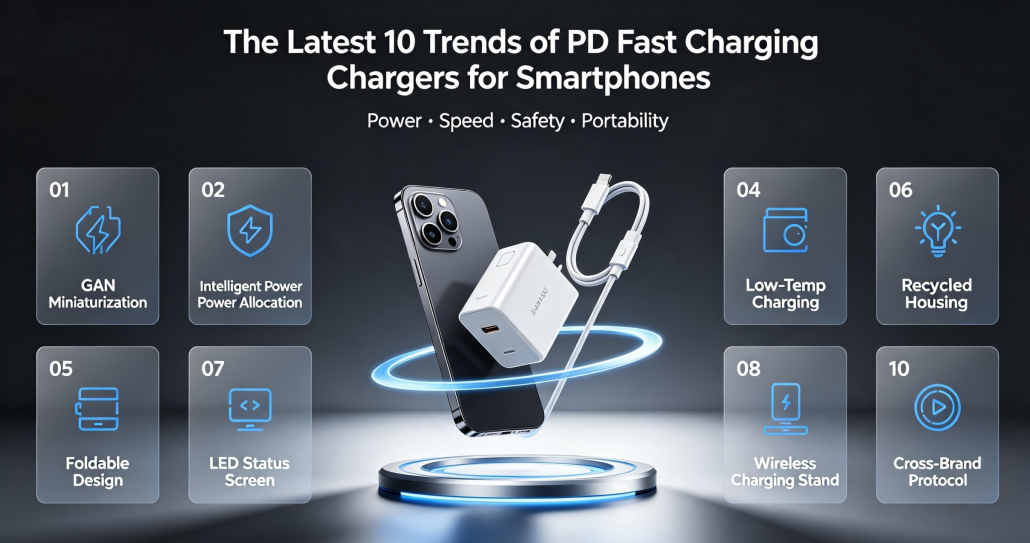
As smartphones, tablets, lightweight laptops and wearable gadgets become essential parts of daily life, consumers are raising higher demands for charging equipment. The traditional bulky, single-function chargers can no longer meet diversified usage scenarios. USB-C PD fast charging has gradually become the universal charging standard across the industry. Driven by iterative chip technology, protocol upgrades and global energy-saving regulations, PD phone chargers are ushering in a new round of innovation. Let’s sort out the ten prevailing mainstream trends in the PD fast charger market in 2026.
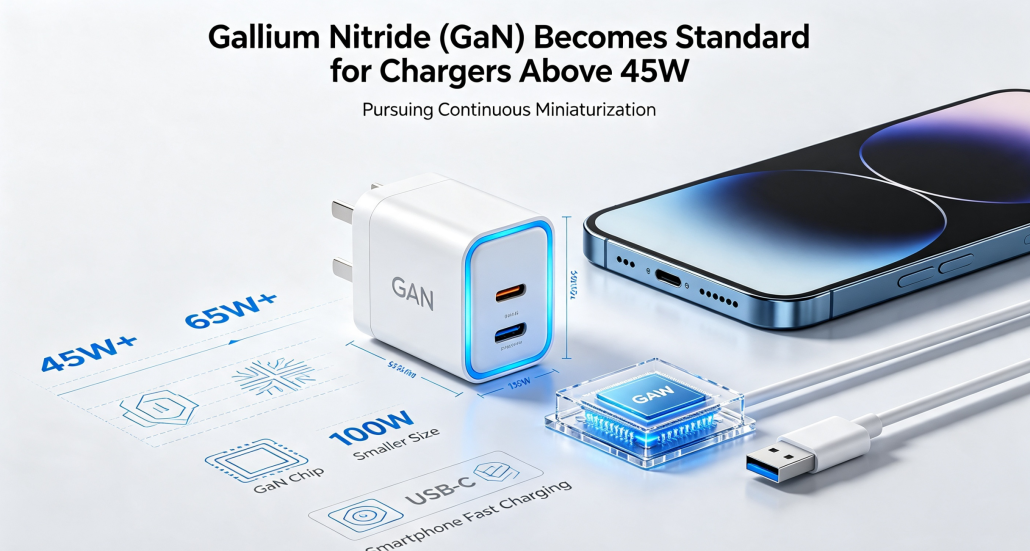
1. Gallium Nitride (GaN) Becomes Standard for Chargers Above 45W, Pursuing Continuous Miniaturization
The fourth and fifth-generation GaN components are widely adopted in consumer chargers. Compared with traditional silicon-based chargers with identical power output, GaN solutions reduce product volume by 40% to 60% while achieving lower operating temperature. Pocket-sized 30W chargers and foldable slim 65W models have become the top choice for frequent travelers. High power and compact size are no longer exclusive features of high-end products. Manufacturers are phasing out pure silicon designs, and the power density of chargers keeps hitting new records. Users no longer need to carry heavy charging bricks during business trips.
2. Comprehensive Rollout of PD3.1 EPR Protocol with Dual Layout for High and Low Power Segments
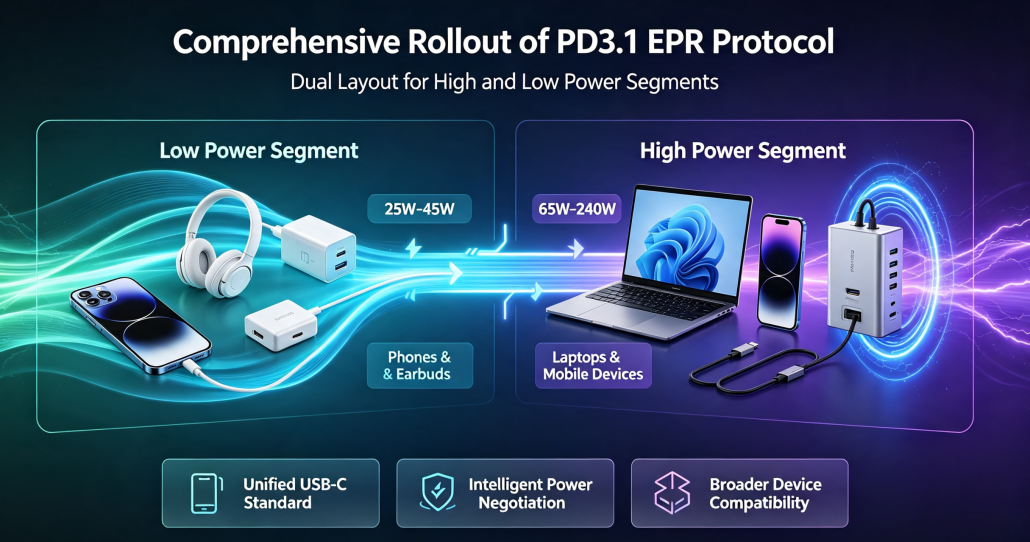
PD3.1 SPR is popularized on 65W–100W mid-range chargers, while flagship 140W–240W products adopt PD3.1 EPR, which supports maximum 240W output under 48V high voltage. Meanwhile, PPS programmable power supply is widely equipped to precisely adapt to the voltage regulation requirements of Apple, Samsung and Android flagship phones. One charger can power both mobile phones and lightweight notebooks. In addition, products adopting the newly released PD3.2 standard have entered small-scale market launch, paving the way for next-generation universal charging.
3. Intelligent Dynamic Power Distribution Replaces Static Power Split, Eliminating “Power Trap”
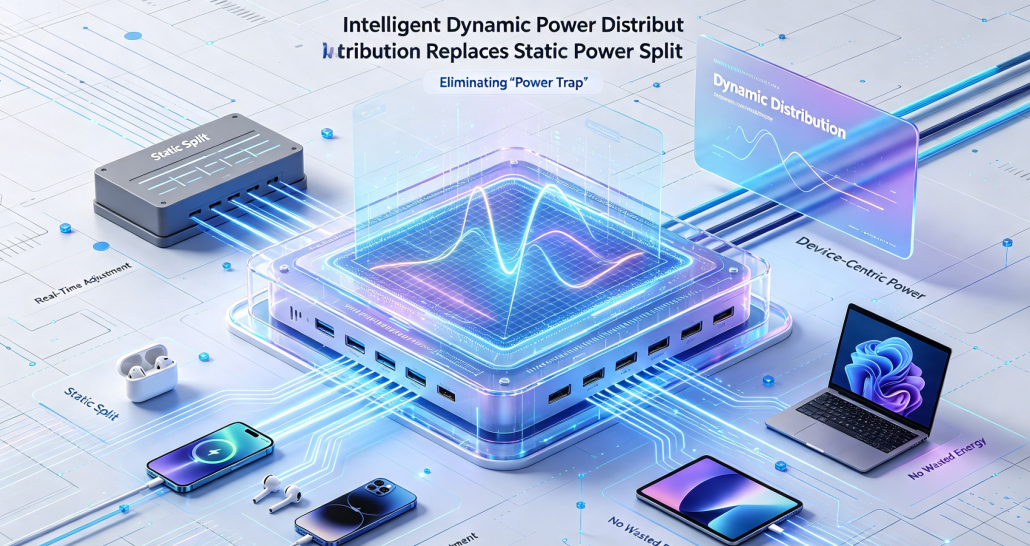
Multi-port configurations including dual USB-C, 2C1A and 3C+A dominate the market. New-generation MCU chips support real-time dynamic power scheduling. The charger preferentially supplies high power to laptops, and allocates energy to mobile phones and wearables according to actual demand. In the past, connecting multiple devices at once would cause obvious charging speed reduction. Premium new chargers maintain stable fast charging performance for multiple devices, with full power output supported when only one single port is occupied.
4. Multi-protocol Integration: PD + UFCS Universal Fast Charging + Compatibility with Brand Private Protocols
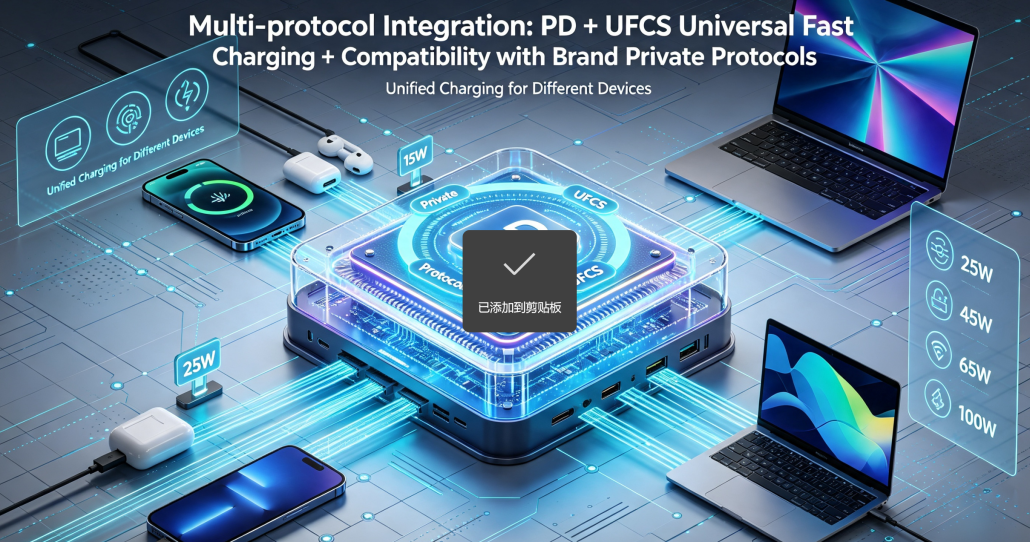
Modern third-party PD chargers break the limitation of single public protocol. Most mainstream models support PD/PPS, UFCS universal fusion fast charging, Huawei FCP/SCP, Xiaomi Surge Charge, Samsung AFC, QC5 and other protocols at the same time. A single charger can fully charge devices from nearly all mainstream brands. This solves the long-standing pain point: third-party chargers fail to trigger original maximum-speed fast charging for Android smartphones. Universal compatibility becomes a core competitive advantage for charging brands.
5. All-in-one Integrated Design: Merging Charging, Expansion and Qi2 Wireless Charging
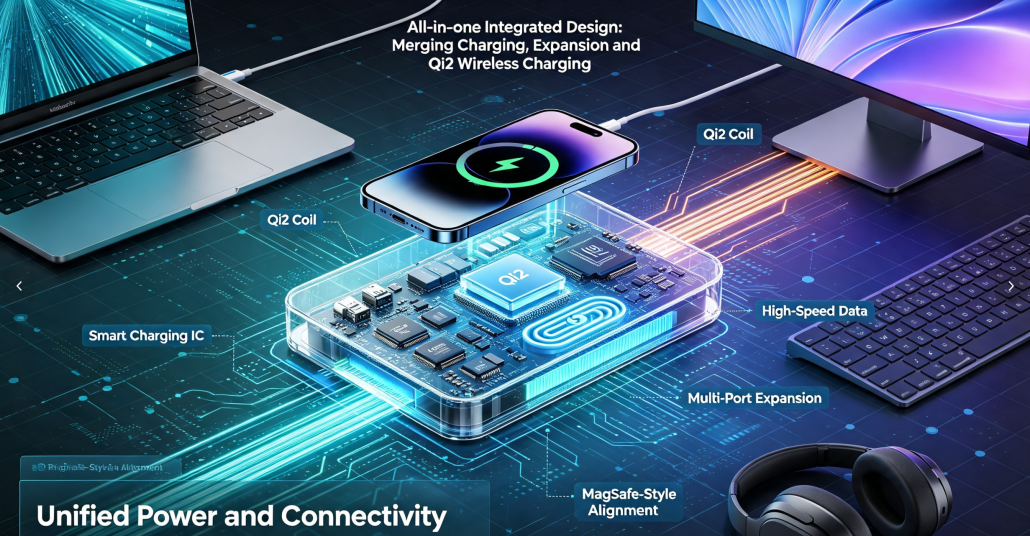
High-end new products adopt composite all-in-one forms. Desktop PD chargers evolve into charging docking stations, integrating Qi2 magnetic wireless charging, high-speed USB data transmission and HDMI video output. A single USB-C cable realizes power supply, data exchange and video signal transmission simultaneously. This design targets office workers, content creators and users with multiple electronic devices, greatly simplifying desktop cable arrangement.
- Popularization of Precision Temperature Control & Battery-friendly Charging Algorithms
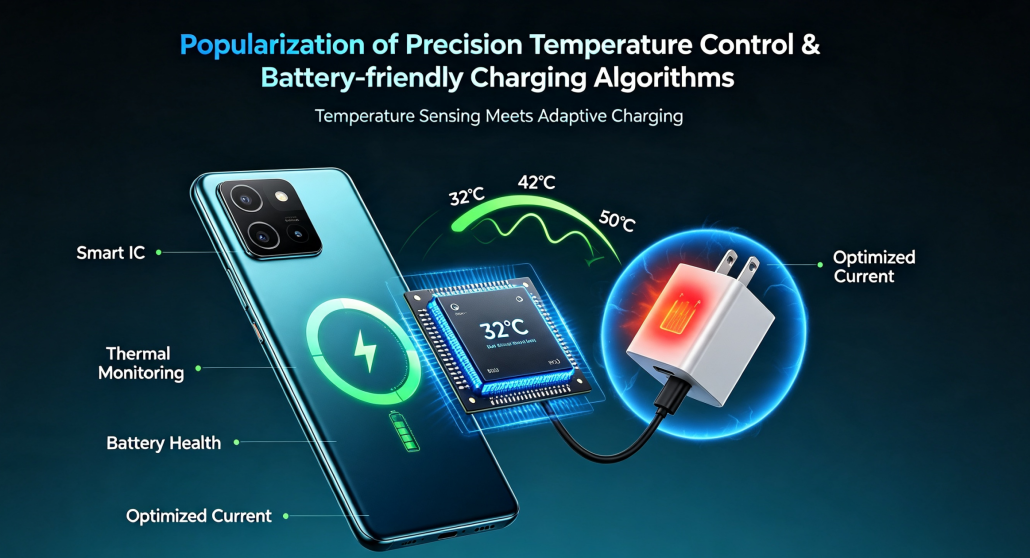
Manufacturers no longer simply pursue higher peak power. AI intelligent temperature control and segmented stepped charging algorithms are widely deployed. The charger automatically adjusts peak power based on the battery status of connected phones, avoiding long-time high-temperature fast charging to slow down battery aging. High-frequency NTC temperature sampling enables gentle power adjustment under heavy load instead of sudden power cut, bringing more stable and safer charging experience.
- Clear Scenario Segmentation and Graded Power Options
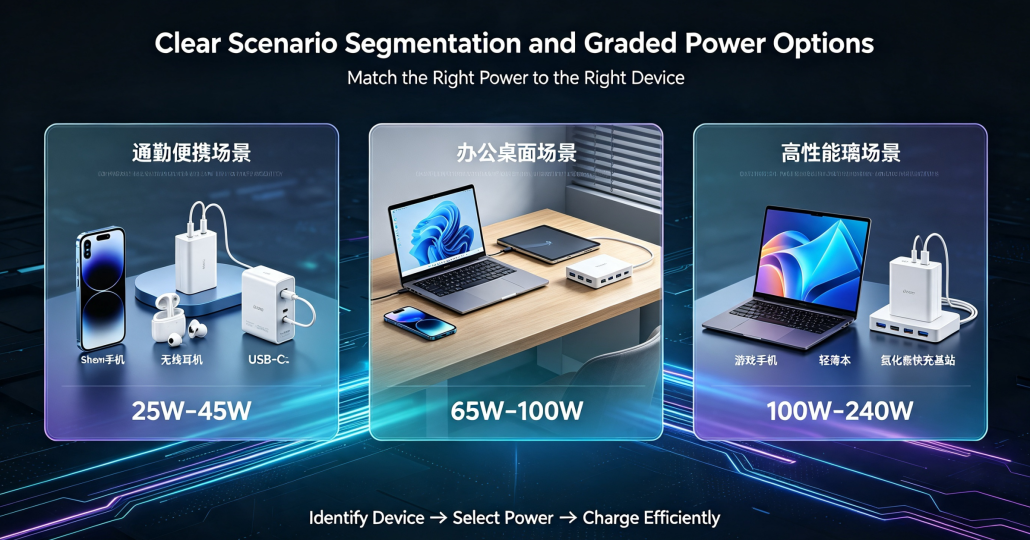
Consumers gradually abandon blind pursuit of exaggerated 240W peak power. The market forms clear power positioning according to usage scenarios: pocket portable 30W–45W chargers for daily charging of iPhones and Android phones; 65W–100W travel all-rounders supporting phones, tablets and lightweight laptops; 120W–160W desktop flagship chargers for multi-device home use. Buyers tend to select chargers whose power matches their own electronic equipment rather than chasing excessive power specifications.
- Rise of Visual Interaction and Intelligent Functions
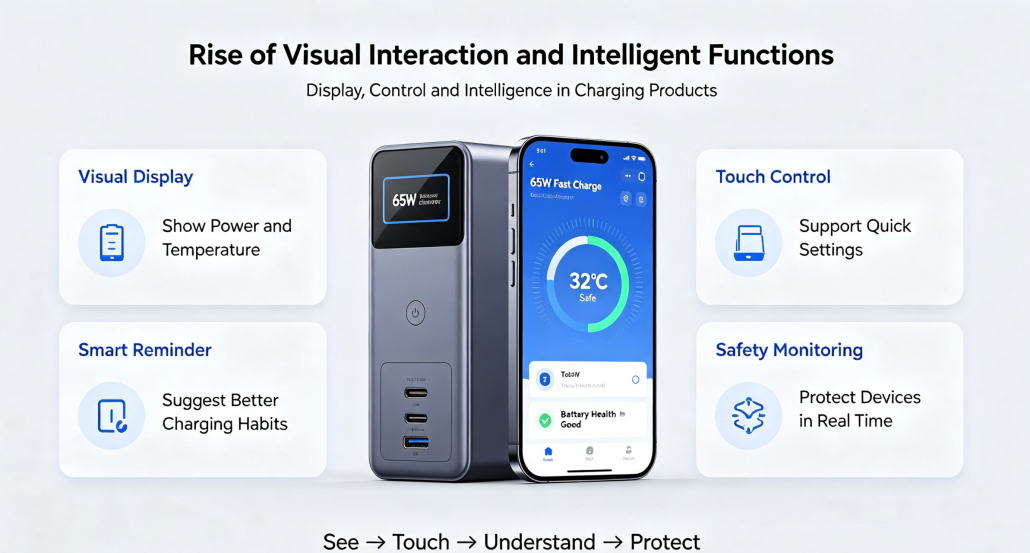
More flagship PD chargers carry digital screens to display real-time output voltage, current and power data. Some premium models support Bluetooth connection with mobile applications. Users can monitor energy consumption, set power limits and activate scheduled power-off functions. Custom indicator lights can distinguish PD fast charge, PPS charge and normal charging states, allowing users to clearly recognize the current charging mode at a glance.
- Eco-friendly Design, Standard Safety Certification & Global Wide Voltage Compatibility
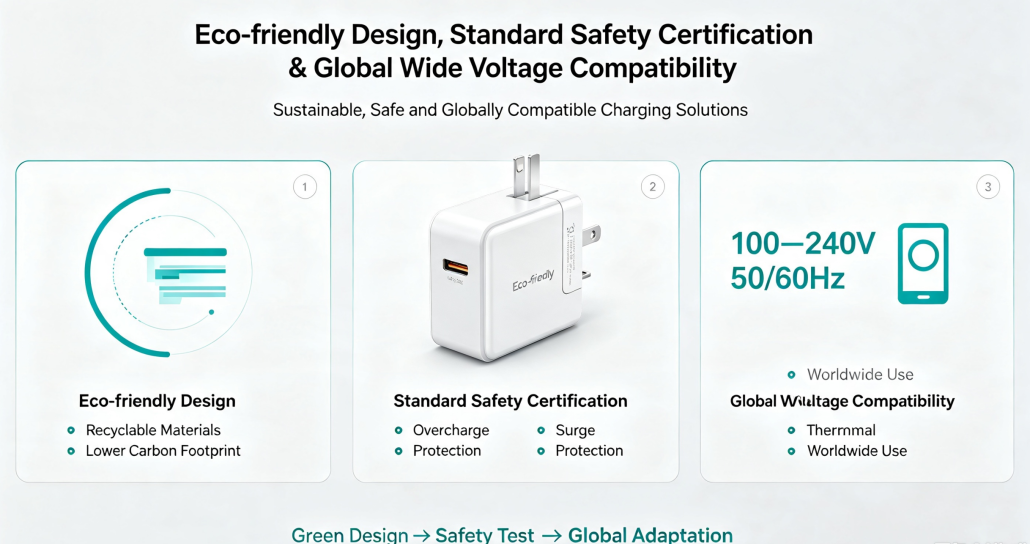
Driven by the EU universal charger regulation, USB-C and PD standards keep gaining worldwide recognition. New chargers adopt low-loss components to improve energy conversion efficiency, and recyclable housing materials are gradually applied in mass production. Almost all formal PD chargers support 100–240V wide global voltage. Travel versions equipped with interchangeable plugs sell well globally. Brand manufacturers pay more attention to formal certifications including 3C, UL and USB-IF to ensure product safety and compliance.
- Gradual Commercialization of Magnetic Charging and Modular Structure
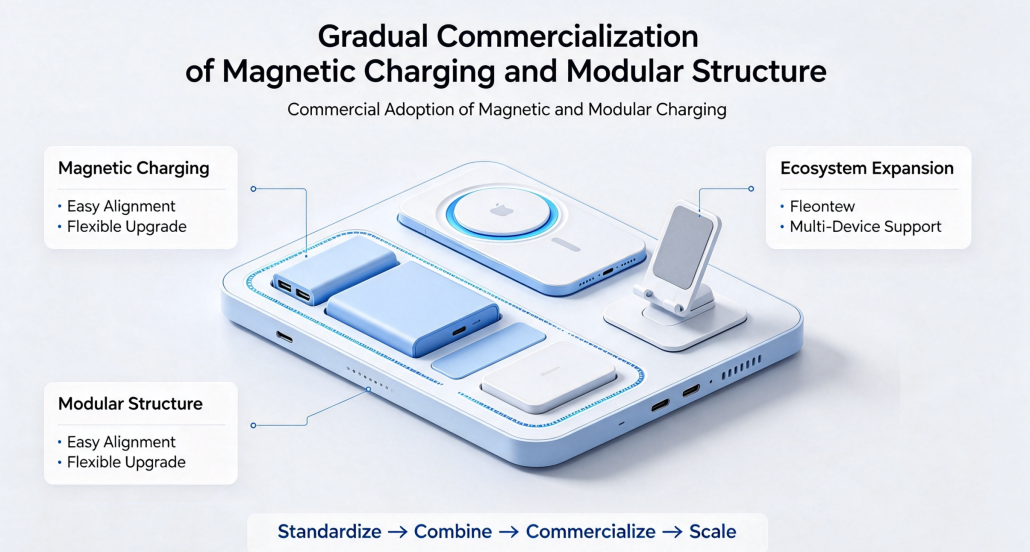
Innovative designs such as magnetic Type-C PD chargers and modular detachable plugs and expandable auxiliary ports are continuously launched. The magnetic structure reduces abrasion caused by frequent plugging and unplugging, suitable for fixed desktop and vehicle charging scenarios. Many merchants start selling matched E-Marker certified fast charging cables together with chargers, building a complete PD fast charging ecosystem combining charging heads and data cables.
Closing Thoughts
The competition of PD fast charging chargers has moved beyond the simple contest of power parameters. In the future, products that balance miniaturization, compatibility, safety, multi-scene adaptability and battery protection will capture more market share. With the continuous advancement of unified global charging standards, PD chargers will further realize real cross-brand universal charging, helping users cut down redundant charging accessories and achieve simpler low-carbon digital life.
